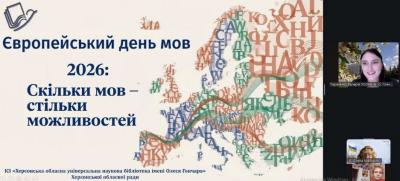
European Day of Languages: The More Languages, the More Opportunities
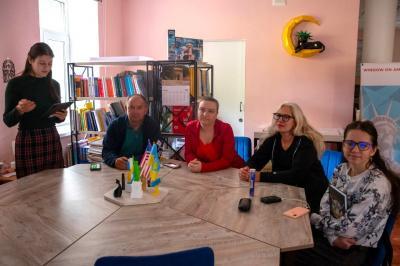
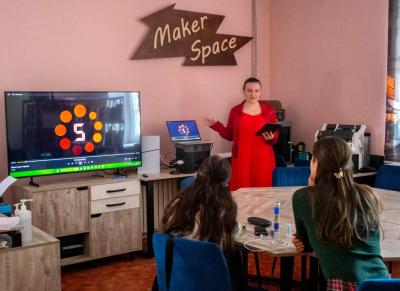
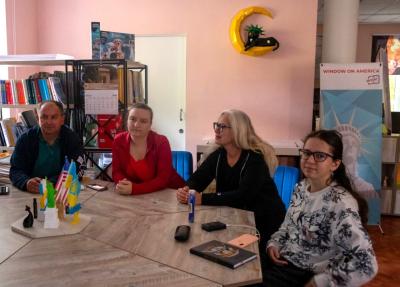
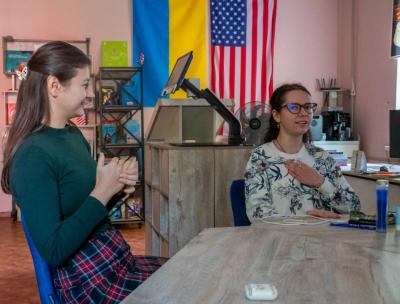
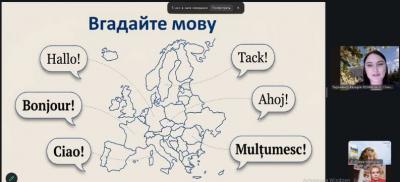
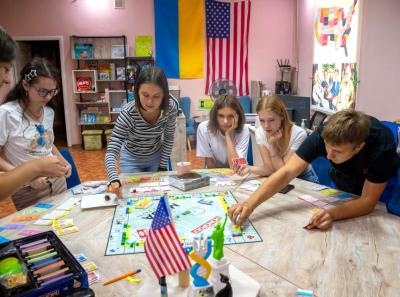
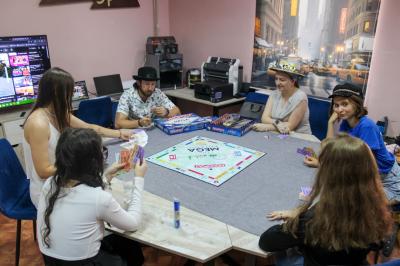
How many languages can you recognize from just one word? Can you guess the meaning of an unfamiliar word without knowing the language? And which European language has preserved the most features of the language spoken in the Viking Age? These and many other language puzzles were explored by participants of the quiz European Day of Languages 2026: The More Languages, the More Opportunities. Two events on the same theme were held for young people and teachers from the Kherson region in an online format, as well as for participants of the Upgrade Youth Club.
Participants identified languages by their greetings, compared familiar words across different languages, found the “odd one out” among languages and European capitals, and discovered words that are difficult to translate into Ukrainian with a single equivalent. These included the German Fernweh - a strong desire to travel far away; the Swedish Lagom - just the right amount; and the Dutch Uitwaaien - going for a walk to clear your mind and refresh your thoughts.
Special attention was given to the Crimean Tatar, Sardinian, and Faroese languages, the tradition of choosing a “Word of the Year,” and the ways social changes and new technologies influence our vocabulary. A music round challenged participants to identify the languages of well-known songs by ear and name their performers.
European Day of Languages is an opportunity to discover the incredible diversity of Europe’s linguistic landscape while also noticing the many connections between languages and cultures. Every new language opens the door to new words, cultural perspectives, and opportunities for communication.
The more languages, the more opportunities!